


We explored how our disconnect from ourselves, each other and the Earth gives birth to the great crises of our times, including the Climate Crisis. And how we can bring deep curiosity, compassion and love to these places of disconnect. We touched on the trauma that leads us to disconnect and the trauma that grows from our disconnect. We explored how to connect more deeply to Earth and how to re-learn the language of Earth.
People for whom the planetary crisis is calling them to stop, sense and allow themselves to be informed by the joy and pain of the world. People who feel curious to explore intimacy as a pathway through the crisis into an emergent future. Prerequisites were being on a path of inner development, having access to a regular resourcing practice and a support network. We aimed for diversity in terms of cultural representation, fields of engagement, gender and familiarity with Thomas Hübl’s work.
Both Jens and Kosha have led labs before and experienced the transformation and healing that is possible. We held an intention for commitment, the regularity of our meetings and our sensitivity as a group to co-shape the unique expression of our collective trauma integration process. We took time to trace back and honour the historic roots of our separation from earth and made space for grief and a sense of dissonance with our current way of living. Most of all, we focussed on the possibility of reconnection to arise. <br /> <br /> We started out with a group of around 55 participants and completed with approx. 35 participants. We met for 22 group sessions from January - December 2024.

At the beginning of our journey, we noticed a sense of mental activation in the group, rather than a fully embodied presence. While our shared care and deep concern for the web of life brought us together, many of us also felt unable to truly connect with the vastness of the topic. We’re used to meeting the “climate crisis” with stress, urgency, and overwhelm—responses that are, in themselves, symptoms of trauma. In this way, our reaction becomes part of the wider challenge. We needed to remember that the deepest place of listening in ourselves and in the biosphere are not separate.
Our subtitle—Embedding ourselves in Embodiment, Earth, and Emerging Future—captured our intention and became a guiding thread for the process. As we deepened, we began to sense how unprocessed trauma, both personal and collective, creates a kind of fog—generating heaviness and disconnection. This fog blocks our natural sense of belonging and the vital feedback loops that help us move in alignment with life on Earth. Reconnecting with these patterns became part of our collective healing.

Over many sessions, we arrived together—again and again—growing our awareness of how and why we disconnect. Living in a time of collapse places immense stress on our systems, often pushing us beyond our capacity to stay related. We attuned to the image of snow falling on ice: the weight of current overwhelm settling on deep, frozen layers of collective trauma. This overwhelm touches ancestral ruptures in our connection to land and life.
Together, we explored the intelligence behind our patterns of absence and dissociation—from our own bodies and from the body of the Earth. Through ongoing sharing and deepening intimacy in the group, we gradually refined our healing instruments: grounding, presence, self- and co-regulation, titration, sensing, and attunement. We came to recognise the body as our closest piece of Earth—the first place of contact, the vessel through which we can truly meet the climate crisis. Reclaiming this connection became a path not only of healing, but of remembering our place within the living world.

We explored childhood experiences of nature—moments of intimacy, sensuality, fear, and shock—and how these were shaped by our families, communities, and educational systems. We reflected on how our ancestors related to nature and how far back we must go to rediscover a deep sense of belonging to Earth. We examined the ruptures in this relationship, tracing the roots of the climate crisis through personal and collective histories: war, destruction, colonialism, slavery—times when bonds of love and connection to land were violently broken. We recognized how turning away from “humus” is intertwined with the humiliation and shame we’ve inflicted on one another. To return to the circle of life, we saw the need for humility. Facing these truths brought a sense of overwhelm, and we intentionally paused to resource ourselves and stay grounded. As part of our reconnection, the group engaged in a 'Nature Immersion'—solo and shared time in the wild to honor life’s sacredness. We concluded with a ‘Council of All Beings,’ inviting the voices of other life forms to speak through us and be heard.

At this point in our journey, we turned toward the wider collective field, entering the lake of ancestral and ecological memory. Beyond our personal stories lies a deeper resonance—a field shaped by centuries of displacement, desecration, and separation from the land. We listened to the voices of those who have witnessed and endured: ancestors and ecosystems, practising to tune into our ancestral, collective and ecological aspects of our nervous systems. We sensed into moments where sacred law was broken—where violence, domination, and disconnection took root. We walked through layers of memory of breaking bonds with Earth. We recognize the roles of perpetrator and victim, and the complexity of interwoven legacies.
Together, we listened through the body. What does it feel like to know of mass extinction, coral bleaching, or the death of forests—not just intellectually, but as treeness, as fishness, as forestness living within us? Our nervous systems carry ancient memories—plankton, mammal, tree-being. Through this synchronized, embodied witnessing, warm data flows again. We can all feel species extinction within our bodies. We begin to sense where information has been frozen, where imagination, projection, or absence have blocked the flow.

In this phase, we entered a space of sacred reflection, honoring the depth of what we witnessed. We slowed our breath and practiced tuning into the subtle frequencies of the Earth, allowing her movements to resonate through our bodies. A surprising sense of being loved back by creation emerged in some—an intimate return to a language long hidden, perhaps for seven generations or more. We recognized the need for grieving spaces—to mourn not only what has been lost, but also what has been silenced in us. As we softened into slower frequencies, we touched our embodied relatedness to climate, to ancestry, to place. We need collective vessels for healing, to process and digest life. We are Earth sensing itself.
In sharing personal stories—love for place, struggles within corporate systems, the challenge of staying connected while seeking change—we deepened into grounded vulnerability. From this place of coherence, the self-healing system awakens—capable of integrating fragmentation. We gave time to digest, to feel, to prepare the inner soil for what wants to emerge: future impulses for restoration, regeneration, and evolutionary belonging.

In this final phase, we turned toward the question: How do I now live from this place of deepened connection? Together, we explored visions for humanity’s evolution—who we need to become, and how we might take our place in the web of life with humility and reciprocity. What forms of societal organization, language, and economy are needed to support a regenerative interbeing with nature? Insights arose from a deeper field: the value of collective presence without urgency, even in the face of crisis. We touched the knowing that right action does not come from doing more, but from evolving our being—slowing down, listening, reconnecting with Earth, and re-learning her language.
We recognized how deeply interwoven the collective traumas of the ‘Climate Crisis’, wars, racism, patriarchy, and all other -isms are. Healing one means listening to all. A new form of activism began to shine through—rooted in gratitude, grounded presence, and belonging. We have done so many painful things to the world and yet, we are still loved. The invitation to start close in emerged. Maybe building a love relationship with one tree and, from there, allowing our engagement and love to show us our path of embodied response.


“Collective trauma integration enables collective evolution and co-creation, which we need to advance on our meta crisis”
“The lab journey really brought me into an exploration of the physicality and immediacy of my relationship with earth and more deeply into the complexities of the cultural influences and travels of my ancestors. I found myself in a re-examination of place - something that I have been exploring for a long time but the lab gave a certain specificity and attention. I noticed a deepening within my earth rituals and ceremonies and a shift in my sense of being and belonging”
“The participants, the triads, the shared experiences—it felt like we embarked on a collective path, weaving together the web of life. This process has given me the space to heal personal and collective wounds I wasn’t even aware of carrying. It has deepened my trust and renewed my hope in humanity and the Earth.”
“My understanding that nature is not 'out there' but that we, as part of the ecosystem we live in, are nature ourselves, although not new to me, was deepened and expanded through my experiences in the Climate Crisis Lab”
“I have gained a felt experience of an ecosystemic aspect of my nervous system, a strand that goes beyond my personal, ancestral and collective nervous system, and through which a relatedness is formed and information flows to me from non-human communities. My body has melted more fully into the planet and I feel closer to the web of life.“
“This Lab has really made me want to honour the wisdom of our bodies, all chakras, our lower earth based ones and those connecting us with soul/spirit wisdom with an integration in our hearts of respect and love. Exploring this together in the safe container of this Lab has been a great impetus to continue the journey.”

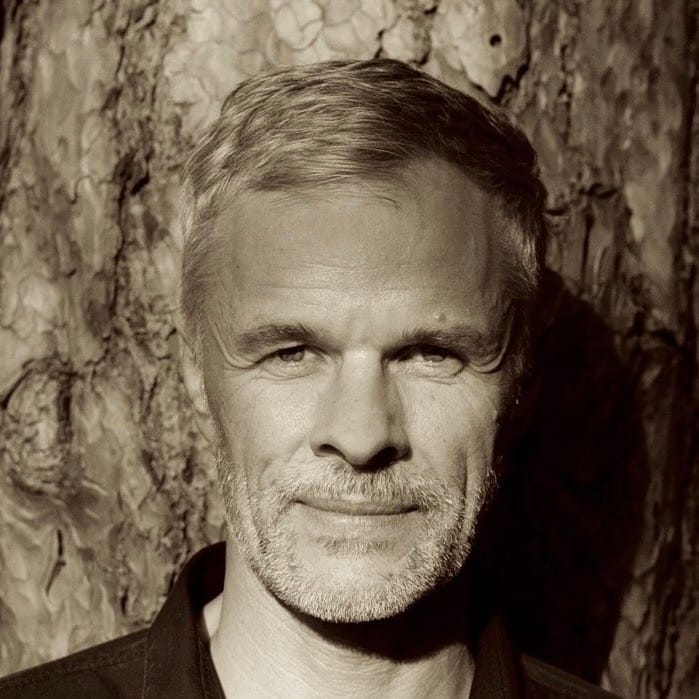
 Kosha Joubert
  English