What did we explore in this Lab?

We set out to explore collective trauma patterns within an organisation or company to understand how the collective dimension of trauma manifests within the day- to-day operations of an organization and as a consequence impacts the fabric of our economy.

Who was invited to participate?

The founders, leadership team. staff and all network members of the Collabsoul Community.

More about the journey of the Lab:

After interviewing a number of organisations we settled on CollabSoul (https://collabsoul.com/), a Brazilian network organization. We chose them because their founders showed the clearest motivation, investment and dedication to dive into a deep process with their organization and involve all their members in it. Another reason we decided to work with CollabSoul was its own mission to help unlock dormant potential in companies by fostering collaboration both internally, with external partners and stakeholders that resonated deeply with us. All of us on the facilitation team have a strong interest and dedication to bring the collective trauma work into organizations and companies. We are motivated by the possibility to change how we create value within our current capitalistic society and potentially change the culture of how we and organizations collaborate with each other. <br /> We started out with a group of 15 participants and completed with 11 participants. We met for 13 group sessions from March 2024 - February 2025.

Stages of our Progress as a Group

Synchronising & Resourcing

We invested a lot in educating the group about the role of resources in this process and building trust by:
Framing our approach to create understanding, f.e. also explaining these steps
Always starting with a check-in
Always doing a guided meditation to become more present
Regularly do triads to create more intimate spaces
Invite them to triads in between the sessions
Explaining resourcing and spending time to identify and share resources

Meeting the Collective Trauma Landscape

As this group had little prior exposure to and experience with (collective) trauma we gave them an introduction to trauma in the first few sessions and then explored with the group in guided meditations, plenary sharing and in triads. We also invited the leaders to share first, to create a sense of safety.

Exploring Individual & Collective Conditioning

We went into deep explorations of personal trauma through guided meditations, homework for the participants to dig into their family and personal history and many sharing sessions. Many of the participants, while being Brazilian nationals, have long immigration backgrounds primarily from Europe. We dedicated a few sessions to exploring and sharing these backgrounds as well as their experience of cultural and societal frameworks that they encounter in their personal as well as professional lives. A lot of the deeper exploration was done personally by the participants in homework we gave them to dig deeper and observe these patterns directly in their lives.

Listening to Ancestral Roots & Voices from the Field

Our main tool here was to dive into guided meditations and then share in the plenary as well as in triads. Especially the combination of guided meditations and plenary sharing unearthed a lot of deep patterns.

Integrating & Restoring

We did not have as much time for the last two themes since we had to do a lot of trust building, education about the notion of trauma and establish basic tools of transparent communication etc. Most of all the group realized that in order to help other organizations collaborate better they needed to start with themselves first and address a number of issues internally. They had a number of concrete ideas on how to reshape their internal culture. The main theme was to empower members/employees outside the founders and leadership team:
To learn and deepen skills that are required for deeper collaboration (transparent communication, deep listening, etc.).
Re-shape internal structures to allow members/employees to participate in defining the direction of the organization.
Give members/employees more agency in decision making etc.
Create spaces for members to get to know each other better and exchange about their wishes, challenges and ideas.

The transformations of a number of participants was deepened through the triads they organized themselves and therapy they arranged for themselves throughout the lab.

Transforming & Meta-learning

We observed quite mixed results within the group.
A handful of participants had quite deep transformations, learned a lot about themselves, their filters and seemed to have made some pretty drastic shifts in their lives both personally and professionally.
Most participants perceived that they had tapped into another way of being, interacting and collaborating with each other but since they could not fully reduce those notions into a clear cognitive framework they were still in the process of digesting the experience both for themselves as well as their professional lives.
The founders/leadership team had a quite confronting experience meeting their own shadows, how they bring those into the organization and what effect that had/has on their work environment. Throughout the process they transformed quite a bit, evolved as leaders and made a number of changes in their organizations.
A small number of participants decided to leave the CollabSoul network since they realized that they are not as aligned with the overall goal of the CollabSoul and the flavor of collaboration.

In addition to personal and immediate organizational changes the whole group realized that their big ambition to change the economy and companies in Brazil gave way to more empathy and the realization that they needed to start amongst themselves.

  • synchronising_resourcing
  • collective_trauma_landscape
  • collective_conditioning
  • ancestral_roots
  • integrating_restoring
  • transforming_learning

Moments of Challenge

  • Limited exposure to trauma or spiritual work – Some participants found the process too slow or not concrete enough and stopped participating. As most had no prior experience with Collective Trauma work, we regularly had to explain what and why we were doing things – which then landed well.
  • Leadership team/founders took charge at beginning – They handled most communication around sessions, partly due to language needs. This hosting energy also bled into meetings until after a few sessions we took over communication and the leadership team shifted their role to being participants.
  • With the Brazilian cultural background of all participants, we would have needed longer and more sessions to go deeper – we learned in the process that in Brazilian culture, people need more space to speak, everyone wants to share their story, and ample space would have created more safety.
  • Combining basic skills education, time for the group to get to know each other, and finding a common theme was too much for the initial 1.5h sessions, which we then extended to 2h for the last few meetings.
  • Many participants hadn’t worked together or known each other before the lab – We worked with a network organisation with a clear leadership team, but many others didn’t know each other well. We spent time building trust to go deeper, which turned out to be a challenging setting.
  • It took us a while to uncover the shared theme of collective trauma – Instead of starting with a clear trauma theme, it took us many sessions to establish trust. Only towards the end of the journey we created more clarity about the collective pattern.
  • The collective pattern that showed toward the end of the journey reflected a national Brazilian theme: Survival. This pattern is present both for original inhabitants of Brazil and for many migrants who arrived over the centuries.

Moments of Grace

  • We had several moments of grace in our lab – when participants shared how they learned to listen more deeply to themselves and others, and to accept rather than judge. Some also voiced doubts and fears that resonated in the group and deepened connection and understanding.
  • We witnessed deep moments when we held a session on why participants were drawn to CollabSoul. Many shared touching stories, reconnecting with their initial spark. This was especially resonant as the first sessions had brought confusion and critique of the process and the organization's status quo.
  • Following from the session where people connected to their spark it was very touching to feel how they developed a lot more empathy for each other. That gentle way of relating to each other persisted throughout the sessions.
  • One participant shared how we changed most of his life after going through deep realizations in our lab meetings. He also started therapy and deepened his process quite a bit. It was especially touching since he was one of the most outwardly critical participants.
  • Many participants shared their fears, confusion, worries in plenary sessions. Often we witnessed participants that were critical of the process or skeptical of the utility to open up the most vulnerably and nakedly.
  • The session in which we discovered the theme of survival, the pressure to perform, the rush the critical view on oneself and the other.
  • It was a truly special session to experience how one participant opened the door to this deep theme in a society defined by European settlers from many backgrounds fleeing their home countries to create and settle a faraway land but never quite getting out of this drive to survive.

Insights

  • Before working with an organization we would have to dive deeper and in a more structured way to understand where the organization is at – We chose a very difficult combination of factors from the open theme to an organization that did not have the cohesiveness we had wished for.
  • We could have invested more in the cohesiveness of our own group – At times it seemed like we had little time to connect to our joy and lightness besides managing the practical aspects of the lab.
  • Taking cultural differences more seriously and adapting to them quicker – We underestimated how different the needs of our Brazilian group were compared with standard groups from the Thomas Hübl field.
  • Finding the balance between providing utility and going deep in a process is tricky – The employees/members of the organization were mainly driven by the utility of the process to their professional work. Focusing on that as the primary angle would have required a dramatic change in the structure.
  • We learned we would have had to create a lot clearer and tighter structure with all the ambiguity we had within our process. Even Though we established shared agreements and commitments we kept the process to loose.
  • Trauma, defined as undigested life events, continues to impact present behavior. It can manifest at individual, ancestral, and organizational levels.
  • Survival emerged as a key theme throughout the program. The group explored how unprocessed trauma affects business relationships and decision-making and learned to recognize when survival-mode triggers impact professional choices.

Our Lab Team

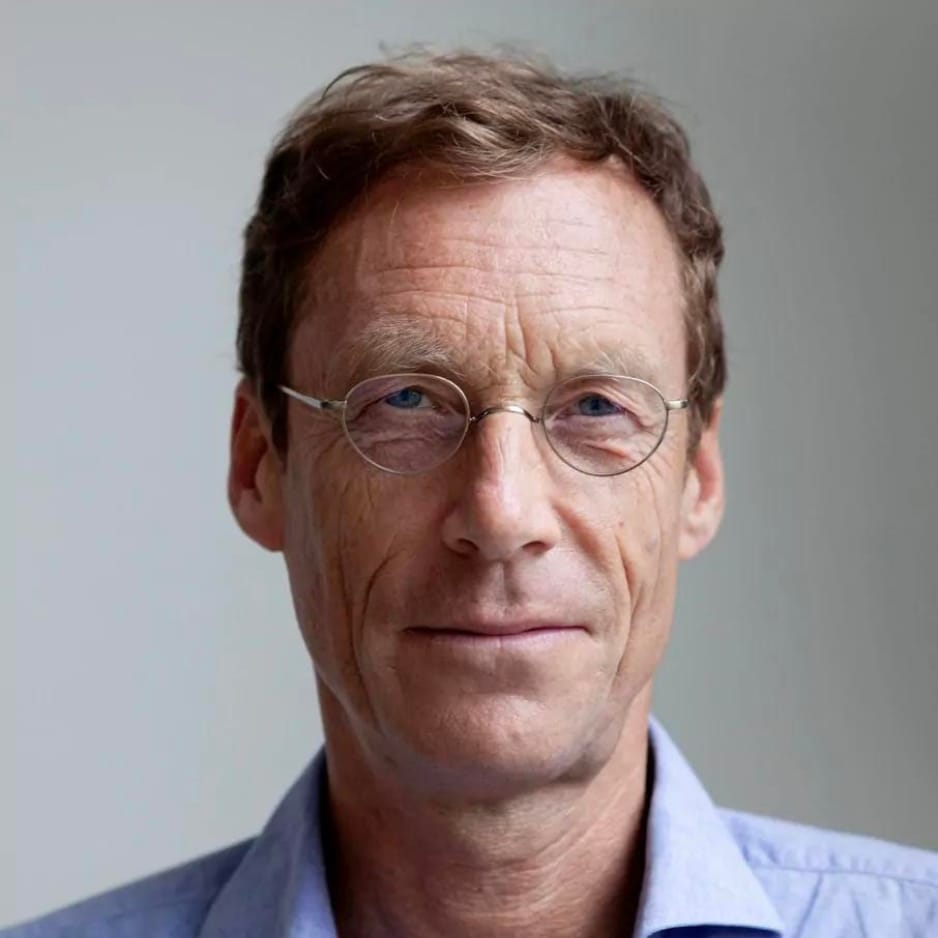
  • Reinier Tilanus

    Reinier Tilanus

    Reinier Tilanus is a coach and facilitator with over 30 years of experience in international business, both as an executive in organizations as well as in the role of coach for executives and teams. Since 2019 he studies with and is certified by Thomas Hübl, internationally renowned trauma specialist, specifically also in collective trauma patterns.
  • Angela von Rotz

    Angela von Rotz

    Angela von Rotz is a seasoned therapist focusing on embodied practices such as somatic experiencing and NARM. She is working with individuals and couples in her therapeutic practice, coaching executives as well as training organizations in trauma-informed work and teaching courses on embodied resilience.
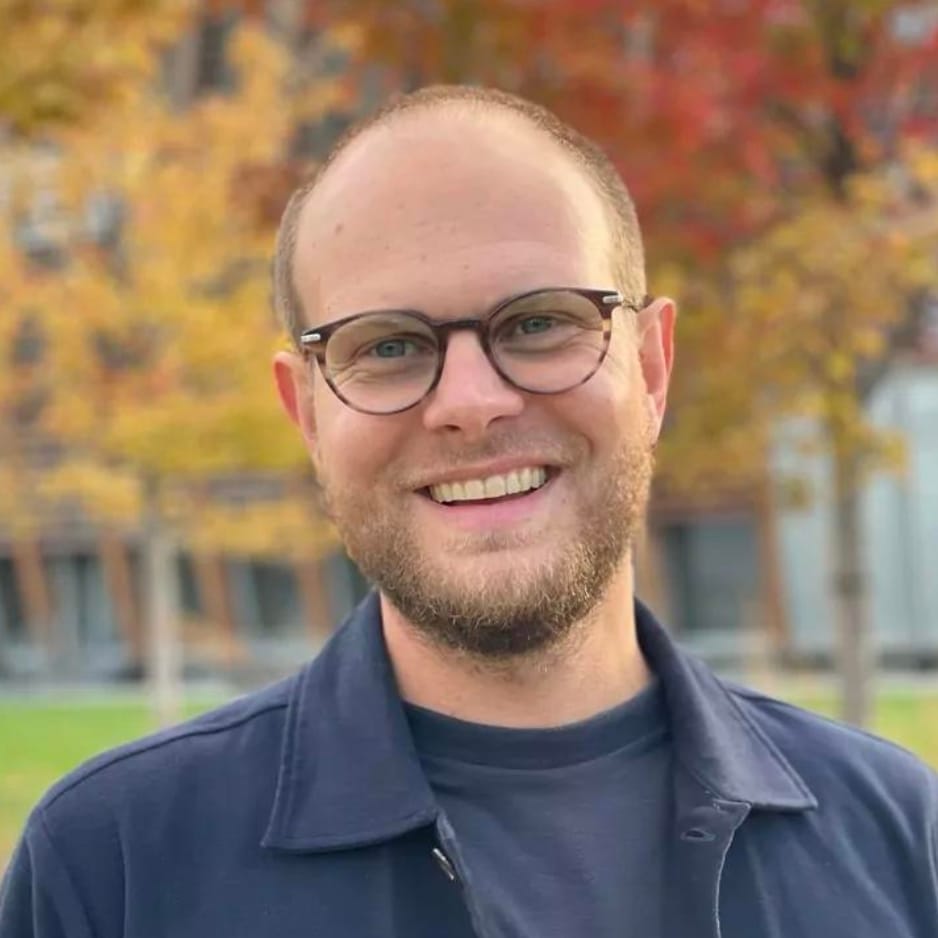
  • Mathias Holzmann

    Mathias Holzmann

    Mathias Holzmann has over 20 years of experience as an operator in the technology industry from starting companies from scratch to growing them to IPO. Most recently he is working with executives, organizations and teams to unlock their relational intelligence.

Integration Labs Participant Application

Thank you so much for your interest in participating in an Integration Lab of the Pocket Project! We appreciate your time and consideration in filling out this application. Because Integration Labs are intensive, you can only apply to one lab.

You are welcome to fill out the form in the language the lab is offered in.

Having trouble?

Contact Support

  • This field is hidden when viewing the form
  • This field is hidden when viewing the form
    • Accepted file types: jpg, jpeg, gif, png, Max. file size: 5 MB.
      We will handle your photo with utmost respect and not to share it with anyone beyond the Lab Facilitators of your chosen Lab and the Pocket Project team. Please choose a current and good quality photo that is a “headshot” (only your head in the photo). To resize or crop your photo, you can use www.picresize.com
    • This field is hidden when viewing the form
      Max. file size: 1 MB.

Join Us

Sign up for the Ukrainian newsletter to support healing collective trauma and reducing its disruptive effects.

Join Us

Sign up for the Jewish newsletter to support healing collective trauma and reducing its disruptive effects.

انضم إلينا

اشترك في نشرة فلسطين لدعم التعافي من الصدمات الجماعية وتقليل آثارها

Join Us

Sign up for the Palestine newsletter to support healing collective trauma and reducing its disruptive effects.

Доєднаєтеся до нас

Підпишіться на наші інформаційні листи. Допоможіть нам зцілювати колективну травму та зменшувати негативні ефекти для нашої глобальної культури.

Join Us

Sign up for the newsletter. Help us to heal collective trauma and reduce its disruptive effects on our global culture.