

In this lab, we explored together how collective trauma affects the way we raise our children, at home and in school systems. In the first layer, we became aware of trauma from our own experience as well as cultural and collective aspects in the past throughout education that are still alive in us. In the second layer, we tuned into the current sources of traumatization in actual school and family environments, including actual reports of child diseases and dangers through social media. We invited other relevant topics coming from group interest.
People interested in trauma-sensitive learning environments and in a deeper understanding of their scars from school time. We welcomed teachers, educators, and parents, but also other professionals such as therapists, social workers, and trainers. For the process of the lab, we invited participants to commit to taking part in every session.<br />
We started to build a container of trust in getting to know each other better. We gave an overview of trauma in education and the layers we want to look at. To dive into the topic we started with our education biography and how this influences our current life. We explored the sources of typical education structures in different countries (given different nationalities) in the past and current sources of trauma in the present day. We included social witnessing practice and time for integration.<br /> <br /> To get to know each other, we started with two extended Sessions of 3 hours. The following 8 sessions were for 2 hours, additional integration time for 30 mins co-regulation at the end, if needed. We did not share recordings to keep the space private and safe. We started out with a group of 50 participants and completed with 20 participants. We met for 10 group sessions from February - December 2024.

Starting from the first session, we focused on creating a warm and safe space, allowing time to get to know each other (in triads and in the big group as well), and slowly get a sense of familiarity within the group. We presented and discussed safety principles and agreements, and invited participants, through a contemplation exercise, to explore their specific needs for safety, later shared and discussed in small groups. We led synchronizing meditation at the beginning of each session and invited participants to practice it daily. Also, we presented principles of transparent communication and used them throughout the Lab journey.
Working on cohering the field of intention was an important part of building group coherence: through a contemplative exercise, followed by journaling and small groups sharing, we guided participants to connect first to their particular intention for joining the Lab and exploring trauma in education, then to connect to the field of intention constellating around this topic. Afterwards, we invited voices to be heard in the big group. We invited participants to get together in triads or small groups in between sessions, offering support for knowing and finding each other. Also, we used Sutra platform to chat and share resources throughout the entire Lab journey.

We have started through the year every meeting with arriving time (welcoming with music) & overview about the session, a meditation (3 sync. med., connecting to self, others, to the group, potential, variety), opening to the topic. In every meeting we offered a triad for deeper exploration and integration.
We met and explored the Collective Trauma Landscape in three steps with different methods:
*Starting school, what that meant and how that felt. Also to see some pictures of ourselves as young children, just joining school.
*How was the growing and becoming in school-time?
What have been resources, before tuning in what was not working.
Exercise - Shape with the body or draw a tree. (“School forest”)
(inviting creativity to express the growing capacity, and the limitations that were felt in the growth process. )
*Perspectives of the current situations.
Some collective topics came up, such as the echo of schooling being overwhelming for some of the participants, fear of being judged or shamed that keeps us from showing up authentically and vulnerably, among others, creating resonance and reverberation in our relational field. (journaling) The question of humanizing education came up, and a load of feelings bubbled up along with it. What is the implication of even needing to humanize something that is supposed to be deeply humane in the first place?

In our Lab session no 6, we had an exploration of what comes up for us as we connect to the idea of humanizing education. Voices were expressed in the big group, in the small groups and also in the chat.
Certain topics arose and were voiced, such as perfectionism, the need to validate feelings, helplessness and hopelessness as we bump into the system’s harmful manifestations, joy running out of teaching and learning, no room for individual rhythm, the need for control, lack of acceptance for students with different learning needs, need for compassion in the learning environments, good grades in school being a chance to get out of the tightness of a totalitarian system, harnessing the power of collective intelligence and so many more.
During summer break we invited to research some points: The roots and DNA of education systems of the country including the families and ancestors.

After the summer break, we invited people to share about their research. We provided a guided inner journey to their ancestors and their relation to education. We explored if they were “winners” or “losers” of the system and how that influenced the way they wanted their children to be in this system. This brought some enlightenment to the personal stories

We invited participants to draw a network - me and the system, or me in the system and to relate to their place in the education system and how they are relating to different parts - parents, teachers, students, kids, individual and collective, and the multiple relations between them, administration. We explored who are my allies, where there is a feeling of overwhelming, what is in the right place to contribute to restoration. Appreciation of what is already done and even the smallest thing matters brought self empowerment and encouragement to participants.

A mother shared that understanding the situation of teachers, that are also victims of the system helped to shape her relation to school, she now focuses more on supporting her children and also teachers than fighting. The deeper exploration about the ancestors relationship to education helped in understanding their own attitude and opinions and to maybe rethink some positions.


“I became softer in my position to school and teachers. I stopped wanting to fight with them or change them. This gives me.more space to engage instead with my daughter and together we can think of more mild ways to respond to the challenges from school and teachers. Instead of reactivity and victimhood, face them with humor, lightness and creativity being connected to the power within.”
“Each session is so engaging. During the session I gained a lot of insights about myself and my relation to the school system. During the last session there was exploration around rules as a means of control and the system as hardware and the people within the system with heart and flexibility. Each session is of great value to deepen my understanding seeing the stories I tell myself around school from a different perspective. I notice softening within me towards the issues I feel about school."
“The lab was very enriching, especially because of the insights into education-based trauma, which is a global phenomenon, probably spread by the colonization of the white man. The trauma in the former colonies seems to be even deeper than in the countries of the colonizers.”
"I had hopes of travelling further on this path with the lab over a year than we did. This reminded me again of the folly of "expectation" of where a collective process will travel. It also reminded me again of the need to be with the process, in the moment, of wherever it should go with its many twists and turns. It seems that a year is a very short time for this work. Though there are many commonalities, there are also many differences, and we can gain much if we commit to staying together."
"My personal insights are that I was personally maybe not that much traumatized and I was honored to witness the wounds of others. Maybe this also means that I didn't allow myself to dig deep enough.....The sessions are slow which gives me time to process and at the same time, it allows my mind to wander which is distracting and rewarding at the same time. Full of contradictions. And being in those contradictions is also a nourishing and confusing state at the same time.”
"I remember many traumatic moments in my life as a learner/student and have seen it over and over again through my children's experiences - and I want to transform that. I joined because I am passionate about growth and healing processes, coming from a conscious personal journey myself of trying to understand past traumatic events and the way I can use that information to help others too...I love meeting people from around the world, from all kinds of backgrounds."

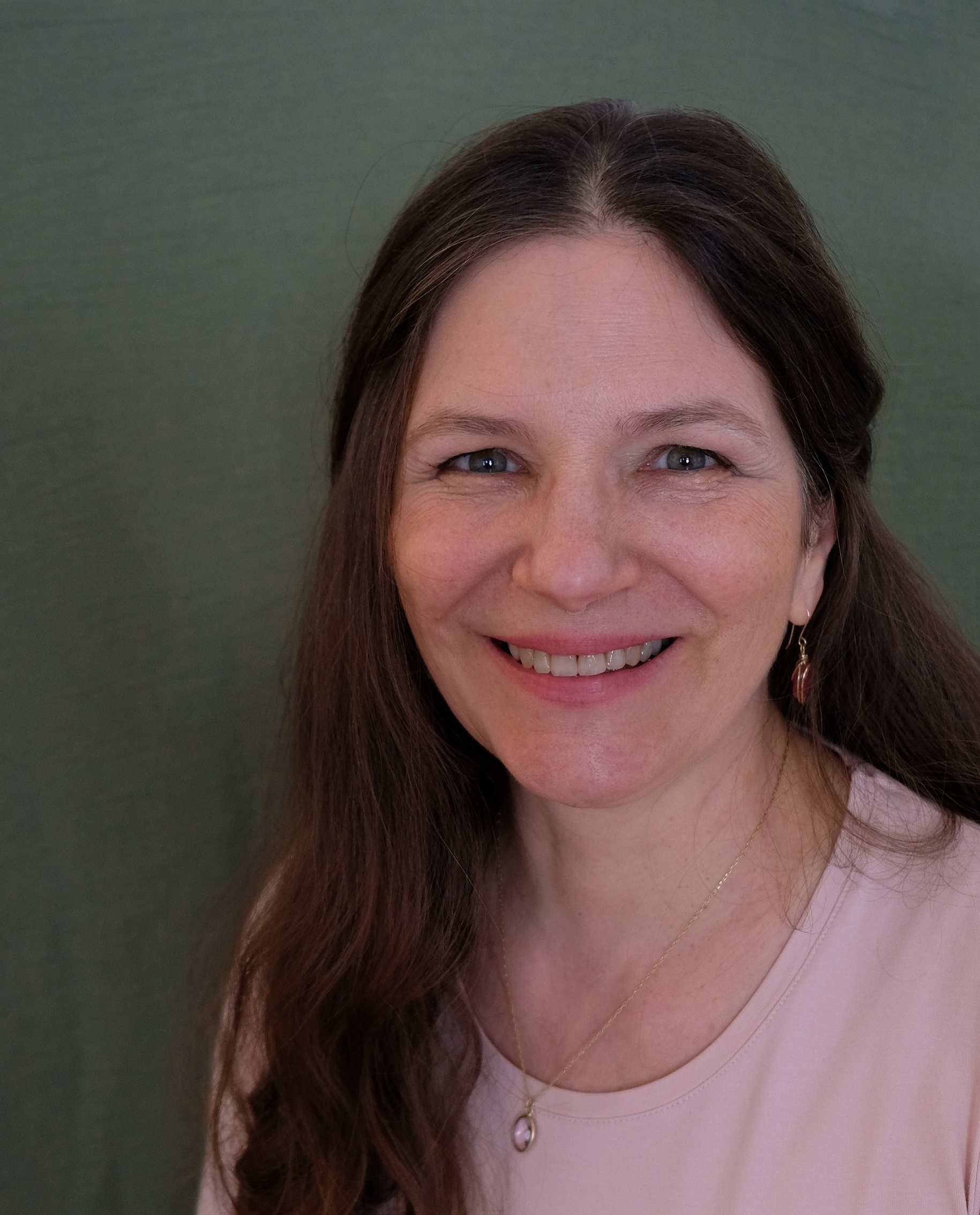

 Silke Weiss
  English